

Updated October 2026. We first published this list in 2017 and refreshed it in 2020. Since then the market has changed more than in the previous decade: InVision shut down, Adobe stopped developing XD, Figma added a prompt-to-app tool, and a new group of AI app builders turned "prototype" into something that can run real code. This version covers the tools we would actually recommend to a founder or product team today, with prices checked on each vendor's pricing page on 27 October 2026.
If you are still deciding what you need to build first, a wireframe, a mockup or a prototype, start with our guide to the difference between wireframes, mockups and prototypes. This page assumes you already know you need a prototype and are choosing the tool.
Quick comparison
| Tool | Best for | Fidelity | Collaboration | Starting price (as of October 2026) |
|---|---|---|---|---|
| Figma | Product teams that design, prototype and hand off in one file | Low to high; Figma Make for coded prototypes | Real-time multiplayer, comments, Dev Mode | Free Starter plan; Professional Full seat $16/month |
| Framer | Landing pages and marketing sites that must go live | High; the prototype is a published site | Shared workspace; extra editors $20/month each | Free plan; Basic site plan $10/month |
| ProtoPie | Advanced interactions, sensors, multi-device flows | High | Cloud sharing, team libraries on Pro | Free (2 prototypes); Basic $25/month |
| Axure RP 11 | Logic-heavy enterprise flows and specs | Mid to high | Team projects on the Team plan | From $29 per user/month; no free plan |
| Penpot | Teams that want open source and no vendor lock-in | Low to high | Real-time, browser-based, self-hosting option | Free Professional plan; Unlimited $7 per editor/month |
| Uizard | Non-designers turning a prompt or sketch into a first draft | Low to mid | Browser sharing and comments | Free (3 AI generations/month); Pro $12/month billed annually |
| Adobe XD | Only maintaining existing XD files | Mid to high | Limited | Maintenance mode; see vendor |
How we chose
We build MVPs, SaaS products and mobile apps, so we judge prototyping tools by what happens after the prototype is approved, not only by how nice the canvas feels. Four questions decided this list:
- Handoff: can a developer get measurements, assets, tokens or code out of it without retyping everything?
- Fidelity range: can you start rough and get to a realistic, testable prototype in the same tool?
- Collaboration: can a founder, a designer and a developer comment on the same file without exporting PDFs?
- Cost and future: what does a small team pay per month, and is the vendor still investing in the product?
Figma
Figma is still the default choice for UI and UX work in 2026. Design, clickable prototyping, comments and developer handoff live in the same browser file, so there is one source of truth for the whole team. Prototypes support flows, smart animate, variables and conditional logic, which covers most app and web prototypes without a second tool.
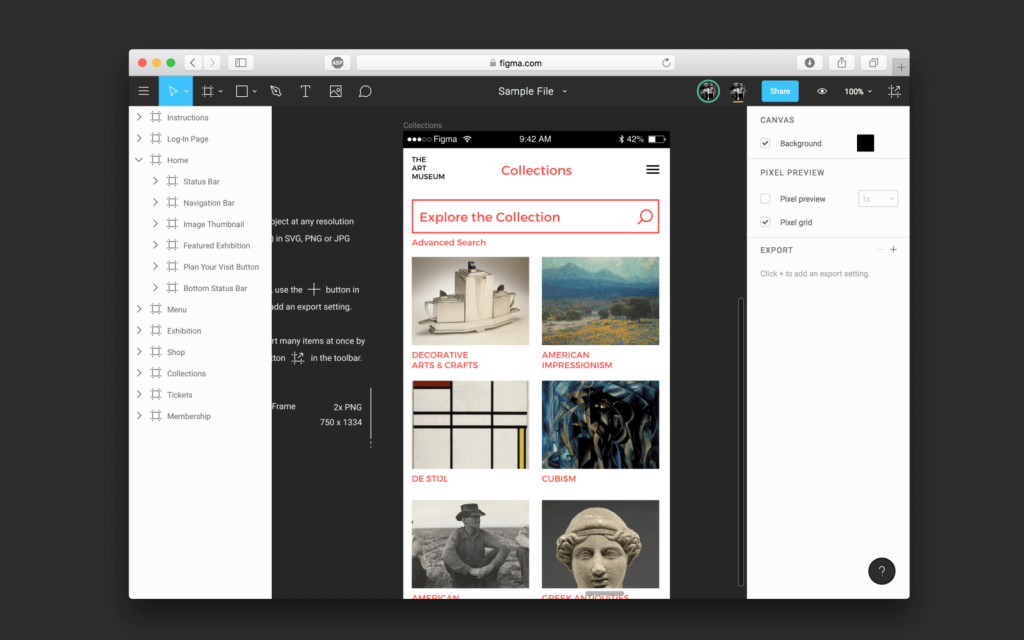
What changed recently is AI. Figma Make is a prompt-to-app tool that turns a prompt or an existing Figma design into an interactive app you can view, edit and publish at a URL. According to Figma's help centre, Make is available for Full seats on paid plans. Dev Mode now includes an MCP server, which lets AI coding assistants read design context directly from the file; on the Professional plan the pricing page lists a limit of 200 MCP tool calls per day.
Pricing as of October 2026: the Starter plan is free, with 150 AI credits a day and up to 500 a month. Professional costs $16 per month for a Full seat, $12 for a Dev seat and $3 for a Collab seat, and a Professional Full seat includes 3,000 AI credits a month. Organization ($55 per Full seat) and Enterprise ($90 per Full seat) are billed annually.
Pros
- Design, prototype, comments and handoff in one file
- Largest ecosystem of UI kits, plugins and community files
- Dev Mode and the MCP server make design-to-code handoff faster
- Figma Make adds coded, shareable prototypes without leaving the product
Cons
- Seat pricing adds up once several people need Full seats
- AI features draw on credits, so heavy Make use can cost extra
- Very complex logic or sensor-based interactions are easier in ProtoPie or Axure
Framer
Framer sits between a design tool and a website builder. You design on a canvas, add interactions and publish the result as a live, hosted site. That makes it the best fit when the "prototype" is really a landing page, a marketing site or a waitlist page you want to test with real traffic. Framer's AI features now centre on agents that create and edit pages inside a live project, alongside its Wireframer prompt-to-layout tool.
The main limitation is that Framer is not a product-app prototyping tool: you cannot export the site as code, and it is not built for app screens with complex state. Pricing is per site. As of October 2026 the pricing page lists a free plan with 500 AI credits to try, Basic at $10 per month (1,000 credits a month), Pro at $30 per month (3,000 credits a month) and additional editors at $20 per editor per month.
Pros
- Prototype and production site are the same thing
- Strong animation and responsive layout tools
- Built-in hosting, CMS and SEO settings
Cons
- No code export; you stay on Framer hosting
- Per-site plans plus editor seats plus AI credits can make the total hard to predict
- Not designed for complex app flows
ProtoPie
ProtoPie is the tool we reach for when a prototype needs to feel exactly like the real product: gesture-driven interactions, device sensors such as tilt or sound, variables and conditions, or several devices talking to each other (a phone controlling a TV screen, for example). You can import designs from Figma and add the interaction layer in ProtoPie, which keeps the visual design in one place.
As of October 2026, the ProtoPie pricing page lists a free plan limited to 2 cloud prototypes with 8 scenes each, Basic at $25 per month for one seat (20 prototypes) and Pro at $47 per editor per month with unlimited prototypes. Annual billing is cheaper.
Pros
- The most realistic interactions in this list without writing code
- Sensor and multi-device support for hardware, automotive and IoT concepts
- Works alongside Figma instead of replacing it
Cons
- A second tool and a second subscription next to your design tool
- Overkill for a standard click-through MVP prototype
Axure RP 11
Axure RP is one of the oldest tools in this list and still the strongest option for prototypes that need real logic: conditional flows, variables, repeaters with data, form validation and detailed annotations for developers and business analysts. It is popular in enterprise, finance and healthcare teams, where a prototype often doubles as a functional specification.
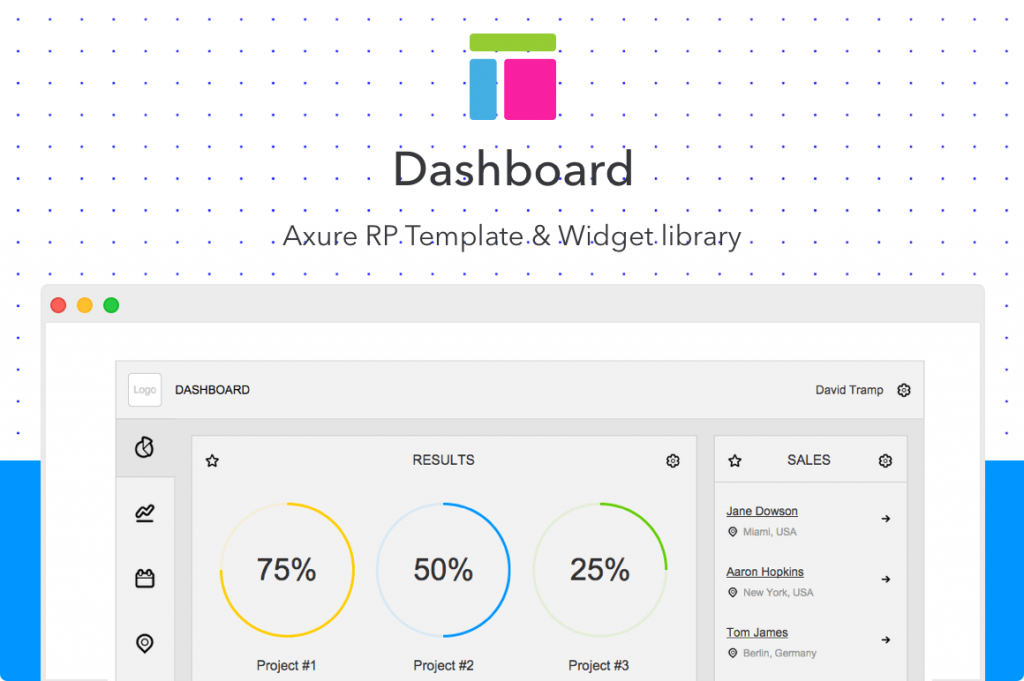
Axure RP 11 is subscription-only and has no free plan. As of October 2026 the pricing page lists Axure RP Pro from $29 per user per month and Axure RP Team from $49 per user per month, with monthly and annual billing options and an Enterprise tier on request.
Pros
- Conditional logic and data-driven prototypes without code
- Built-in documentation and annotations
- Good for complex forms, dashboards and admin tools
Cons
- Steeper learning curve than Figma
- Visual design tools are weaker, so many teams design elsewhere first
- No free plan
Penpot
Penpot is an open-source design and prototyping tool that runs in the browser and can be self-hosted (source code on GitHub). It uses open standards (SVG, CSS-style layout such as flex and grid), which developers tend to like, and its prototyping covers flows, interactions and overlays. It is the obvious pick if you need to keep design files on your own servers or want to avoid depending on one vendor.
As of October 2026 the Penpot pricing page lists a free Professional plan described as "free and fully featured", an Unlimited plan at $7 per editor per month capped at $175 per month for the whole team, and an Enterprise plan at $25 per member per month.
Pros
- Open source and self-hostable; no lock-in
- Generous free plan
- Layout model maps closely to CSS
Cons
- Smaller plugin and template ecosystem than Figma
- Fewer advanced prototyping features than ProtoPie or Axure
Uizard (now part of Miro)
Uizard targets people who are not designers. Its Autodesigner generates multi-screen app or web drafts from a text prompt, and it can turn a screenshot or a hand-drawn wireframe into editable screens. Miro acquired Uizard in June 2024, and Uizard is still sold as its own product.
It is good for getting a founder's idea onto screens in an afternoon and for early conversations with users or investors. It is not a replacement for a proper design system or for a designer's judgement on layout, accessibility and edge cases. As of October 2026 the Uizard pricing page lists a free plan (2 projects, 3 AI generations a month), Pro at $12 per month billed annually (500 generations a month) and Business at $39 per month billed annually.
Adobe XD: maintenance mode
Adobe XD was a solid prototyping tool, but Adobe's XD support page states that it is in maintenance mode: Adobe is not investing in new features and only addresses bugs, security and privacy issues for existing customers. No end-of-support date had been announced when we checked in October 2026. If your team still has XD files, keep them working, but do not start new projects in XD; plan a move to Figma or Penpot instead.
Other tools worth knowing
- UXPin: prototypes built from real code components (Merge), which helps teams with an existing React design system. As of October 2026, Core costs $29 per seat per month billed annually ($49 billed monthly), and there is a limited free plan.
- Balsamiq: deliberately sketchy low-fidelity wireframes that keep discussions on structure, not colours. As of October 2026, the Cloud Starter plan is $16 per editor per month billed annually, with a 14-day free trial.
- Webflow: like Framer, useful when the prototype should be a real website; it gives more control over CMS and interactions. See vendor for current pricing.
- Justinmind and Proto.io: no-code tools for high-fidelity mobile and web prototypes with ready-made UI libraries. See vendor for current pricing.
AI prototyping tools in brief
A separate category has grown fast since 2024: tools that turn a prompt into screens or into a running app. Design-first tools such as Figma Make and Uizard produce editable designs or design-linked prototypes. Code-first builders such as v0, Lovable, Bolt and Replit Agent produce working front ends, and sometimes back ends, that you can click through, deploy and share.
They are excellent for speed and for testing an idea with real data, but they raise new questions about code ownership, security and usage-based pricing. We compare them in detail in our guide to AI prototyping tools in 2026.
Tools that are gone or no longer recommended
- InVision: announced in January 2024 that it would shut down its design collaboration services, and access ended on 31 December 2024, after which documents were deleted. Its Freehand whiteboard had already been sold to Miro. If you have old InVision links in your docs, they no longer work.
- Adobe XD: in maintenance mode (see above).
- Concept.ly and Mockup.io: both appeared in earlier versions of this list. When we rechecked in October 2026, concept.ly no longer resolved and Mockup.io's product page returned a 404, so we have removed them.
How to choose by role
- Non-technical founder: start with Figma's free plan or Uizard to sketch the core flow, then have a designer turn it into a clickable Figma prototype you can test. If you want something that runs, read our AI prototyping tools guide first.
- Product designer: Figma as the base; add ProtoPie when interactions matter, or Axure when logic matters.
- Product manager or business analyst: Axure for rule-heavy flows and specs; Balsamiq or Figma for quick wireframes in workshops.
- Developer or design-engineer: Figma with Dev Mode and its MCP server, UXPin Merge if you already have a coded component library, or Penpot if you want open formats and self-hosting.
- Marketing site or waitlist page: Framer or Webflow, because the prototype can be the live page.
Whatever you pick, keep the prototype focused on the one or two flows that decide whether the product works, and test it with users before you write production code. Our guides on clickable prototypes and on why startups should prototype an app first cover that step, and what an MVP costs in 2026 covers the one after it.
Need a prototype without hiring a design team? KFG International's UI/UX design and prototyping service delivers a clickable prototype in 48 hours, built in Figma so your developers can take it straight to code. When you are ready to build, see our monthly development plans.
Frequently asked questions
What is the best free prototyping tool in 2026?
For most teams, Figma's free Starter plan or Penpot's free Professional plan. Figma has the bigger ecosystem; Penpot is open source and describes its free plan as fully featured. ProtoPie's free plan is good for trying advanced interactions but is limited to 2 prototypes.
Is Figma still the best prototyping tool?
For general UI and UX work, yes: it combines design, prototyping, collaboration and developer handoff in one file, and Figma Make adds prompt-based, coded prototypes. Specialist tools still beat it in their niches: ProtoPie for sensor and multi-device interactions, Axure for logic-heavy flows, and Framer for prototypes that should go live as a website.
What replaced InVision?
InVision's services ended on 31 December 2024. Most teams moved to Figma for design and prototyping, and to Miro (which bought InVision's Freehand whiteboard) for workshops. ProtoPie and Penpot are also common replacements.
Is Adobe XD discontinued?
Not formally, but Adobe says XD is in maintenance mode: no new features, only bug, security and privacy fixes for existing customers. We do not recommend starting new projects in it.
Can AI create a prototype from a prompt?
Yes. Figma Make, Uizard and Framer generate designs or interactive prototypes from prompts, and builders such as v0, Lovable, Bolt and Replit Agent generate working apps. The output is a fast first draft; it still needs a designer and an engineer to review usability, accessibility, security and code quality. See our AI prototyping tools guide.
What is the difference between UI and UX prototyping tools?
In practice the same tools do both. UX prototyping focuses on flows and structure, often at low fidelity (Balsamiq, Figma wireframes); UI prototyping focuses on the visual and interactive details at high fidelity (Figma, ProtoPie, Framer). Our wireframe vs mockup vs prototype guide explains the stages.